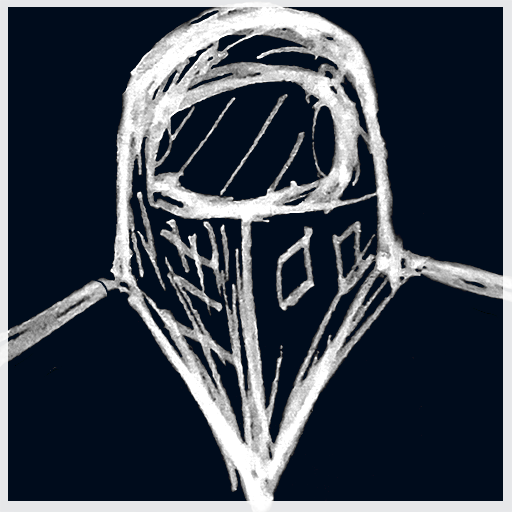
Snorri Speaks
“The opulent mythologies of the Norse pagans barely survived!” Cried the professor. “Wounded and disfigured, like the All-father with his lone eye, the stories of the Norse stumbled to us over a narrow bridge. This tenuous, windswept causeway was none other than the tiny handful of Viking historians of the thirteenth century. And they were poets too. Their chief bridge keeper, was Snorri Sturluson, of Iceland: politician, scholar, poet, and warrior.”
No one reacted to the odd, old name.
I relaxed in my chair at the very back of the lecture hall, listening to my colleague speak in the same way I enjoy hearing a gifted musician play.
“It was Snorri Sturluson who, with great love for the material, absorbed the Skaldic and Eddic poems that belonged to the rich oral tradition of his people. And he pored over manuscripts of runes, gleaning from them tales of Odin, the All-father, striding with staff in search of wisdom; legends of the Voluspa, prophecy of a seeress who foretells of a great, future war and the end of the gods; tales of the world ash tree called Yggdrasil, sustainer of all creation thrumming through roots and limbs… We are so fortunate that the writings of this luminary have survived to our days!”
Frank Henryk paused and calmly looked down, as if examining his notes. I hid a smile, knowing it was all part of an act. After a twenty-year tenure as professor of Scandinavian Mythology and History, Frank knew the material by heart. The lectern before him was, in truth, empty of any books and papers. And after two decades, he had mastered the art of anticipation, the perfection of the pregnant pause, the science of story.
Professor Henryk looked up suddenly with pale eyes.
“But now a specter looms up before us! Yes, a strange spirit that clouds the vision of the oracle… This ghost, which so haunts our attempts at understanding the ancients, is Christianity!
“Christianity: the religion that, by the thirteenth century, had well supplanted Paganism in the Norse and Viking world. Sturluson and his contemporaries, the scholars tell us, were Christian men who wrote of their fathers’ beliefs with a fondness for the past, but with hearts that belonged to their new faith. And thus, Sturluson tells a creation story that comes from both the Pagan mind and the pages of Genesis. He speaks of the death and resurrection of the god Baldur while graving connecting lines to the Christ of the Gospels. It is said that Sturluson was a Christian convert and that his main work, the Prose Edda, does exhaustively detail pagan myths, but only by going out of its way to pronounce subservience to Christian dogma.
“But I urge you, my dear students, to make your own study and know that history is a very crude discipline. We work in the dark, with scant material and resources, and we cannot help but project our own modern sentiments and conjectures onto men and women we’ve never seen or spoken with. But perhaps one day you will attain a new understanding, see the words of the ancients in a new light, and heal our imperfect field of study with your insights.
“Like the oracle of the Voluspa, that prophetess who saw the far-flung past and future, your vision may cut through the fog of time. You may behold Sturluson as more than a mere historian: as a true sage and mystic. And the mystics are not confounded by differences and duality; they do not separate and compartmentalize but behold the magic of synthesis. If Sturluson was such a man, then he may have been both a Christian and a Pagan. He would have appreciated both traditions and, together, they would have made his faith strong!
“Sturluson would have understood that if God is infinite and ineffable, then the Polytheistic tradition of his forebears aptly conveys His vast nature. The Monotheism brought to Sturluson by the Christians was edifying, liberating, and beautiful, but it struggled with a contradictory God, a strange personality, angry one minute and compassionate the next. A pantheon of Gods, on the other hand, like the Elohim of the Old Testament, the Army of the Voice, illustrates the Divine in a different way: as a collection of different beings or principles, who make up one whole.
“Am I saying that Polytheism is superior? No. I don’t believe that one view is better than the other. Instead, they each do their best to capture, in a bottle, a beam of the great and ineffable sun, so that we may admire and comprehend it. The mystics tell that holding and adhering to both viewpoints, simultaneously, leads to a better relationship with that mysterious and confounding God! When we see Him as both the One and the Many, we cannot force him into a narrow and anthropomorphic concept to worship like an idol.”
The professor smiled, the vulnerable smile of a man madly in love with the topic at hand. It was the disarming look that all of us, his friends, knew well. But as he looked out across the wide lecture hall, his face sank a little at the sight of students slouched and slumped in their seats. They were technically awake… More than half were raptly absorbed in their phones.
“OK, that’s all for today,” he said softly. Frank was a gentle soul, lacking the fierce reputation of the ancient warriors he loved to study. “Please keep up with your reading and we’ll pick it up next week.”
The kids walked out drowsily. I descended the aisle and approached the lectern.
“Frank! That was fun!” I shouted, clapping my old friend on the back.
“Was it?” He asked earnestly.
“Yes! Don’t pay attention to this bored crowd. These days, we all lecture to a sea of smartphone flotsam.”
The professor smiled politely.
“Hey listen!” I grabbed his shoulder. “Since we don’t have any more classes for the day, what do you say we go and find a terrific mead hall?!”
Frank laughed and picked up his briefcase. We left the empty, cavernous auditorium, setting forth on our quest.